Digital Bankruptcy Early Warning System Berbasis XBRL Pada Perusahaan Textile Bursa Efek Indonesia
Keywords:
Altman Z-Score, Financial Distress, Textile Industry, XBRLAbstract
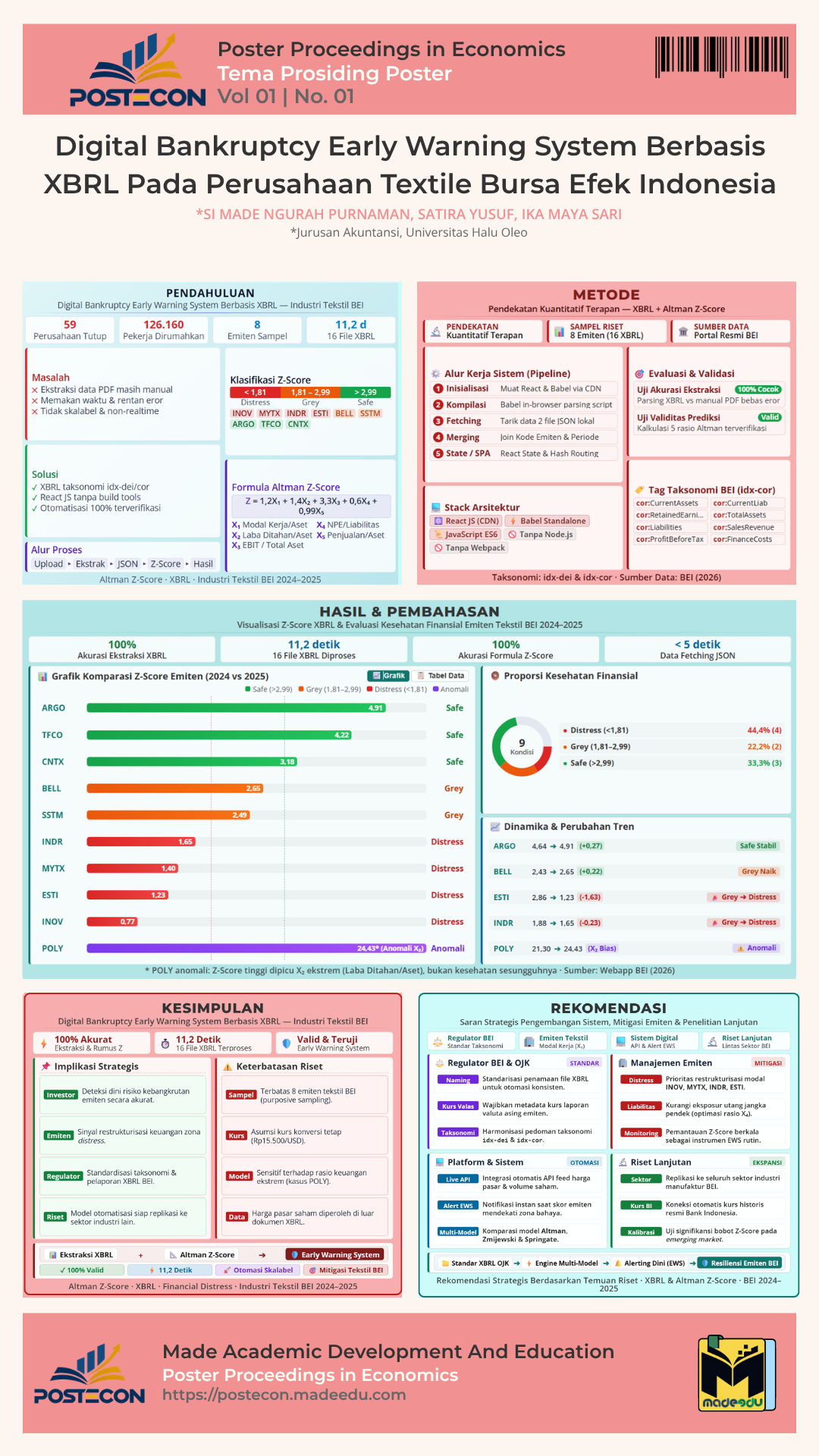
Abstract: The Indonesian textile and textile products (TPT) industry is facing acute structural pressure, with over 126,000 workers laid off between 2023 and 2025 due to the closure of 59 companies. This crisis underscores the critical need for early warning systems capable of detecting financial distress before it reaches irreversible stages. Previous studies on financial distress in Indonesian textile companies have relied on manual extraction of financial data from PDF reports—an approach that is time-consuming, error-prone, and inherently not scalable for real-time monitoring. This study addresses that gap by integrating eXtensible Business Reporting Language (XBRL) instance documents, mandated by the Indonesia Stock Exchange (IDX) for all listed companies, with the Altman Z-Score model within a single automated workflow. The research employs an applied quantitative approach. Using purposive sampling, eight textile companies listed on the IDX with complete XBRL data for 2024–2025 were selected as the sample. A web application system was developed using JavaScript and React JS via CDN, without build tools such as Webpack or Node.js, to extract financial data automatically from XBRL ZIP files and compute the Altman Z-Score. System evaluation results show 100% extraction accuracy across all standard idx-dei and idx-cor taxonomy tags, with 16 XBRL files processed in 11.2 seconds and Z-Score calculations completed with 100% accuracy after data conversion to JSON format. Financial health analysis reveals three distinct groupings: ARGO, TFCO, and CNTX are classified in the safe zone (Z > 2.99); BELL and SSTM are in the grey zone (1.81 ≤ Z ≤ 2.99); while INOV, MYTX, INDR, and ESTI fall into the distress zone (Z < 1.81). A notable anomaly was identified in POLY, whose extremely high Z-Score (21.30–24.43) is distorted by an abnormal retained earnings-to-total assets ratio rather than reflecting genuine financial health. This study contributes methodologically by demonstrating a scalable, open-data approach to financial distress analysis, and provides empirical evidence that XBRL infrastructure in Indonesia is sufficiently mature for automated systematic financial surveillance.
References
Altman, E. I. (1968). Financial ratios, discriminant analysis and the prediction of corporate bankruptcy. The Journal of Finance, 23(4), 589–609. https://doi.org/10.1111/jofi.13151
Altman, E. I., Iwanicz-Drozdowska, M., Laitinen, E. K., & Suvas, A. (2017). Financial distress prediction in an international context: A review and empirical analysis of Altman's Z-Score model. Journal of International Financial Management and Accounting, 28(2), 131–171. https://doi.org/10.1111/jifm.12053
CNBC Indonesia. (2024, Desember 24). Borok industri tekstil terkuak: 30 pabrik tutup, korban PHK berjatuhan. https://www.cnbcindonesia.com/news/20241224170914-4-598543
Journal of Research and Publication Innovation. (2024). Analisis financial distress dengan model Altman Z-Score, Zmijewski, dan Springate pada perusahaan sub sektor tekstil dan garmen yang terdaftar di Bursa Efek Indonesia (BEI) periode 2018–2023. Journal of Research and Publication Innovation, 2(4). https://jurnal.portalpublikasi.id/index.php/JORAPI/article/view/937
Juhandi, N., Fahlevi, M., Purnamawati, I. G. A., Kesa, D. D., Setyawan, B., Yusuf, & Tantriningsih, H. A. (2022). XBRL: The new e-language of financial digital reporting in Indonesia. Journal of Management Information and Decision Sciences, 25(S1), 1–8.
Kamila. (2025). Financial distress analysis using the Altman Z-Score model on textile companies in Indonesia Stock Exchange. InFestasi, 21(1). https://journal.trunojoyo.ac.id/infestasi/article/view/29827
Kementerian Perindustrian. (2024, Juni 22). Industri tekstil krisis, Kemenperin bantah alami sunset industry. https://validnews.id/ekonomi/industri-tekstil-krisis-kemenperin-bantah-alami-sunset-industry
KSPN. (2025, November). Industri tekstil nasional terpuruk diterpa gelombang impor murah. Indotextiles. https://indotextiles.com/joomla30/2958
Putri, R., & Setiawan, M. (2024). Pengaruh penerapan pelaporan keuangan berbasis extensible business reporting language (XBRL) terhadap ketepatan waktu pelaporan keuangan: Studi empiris pada perusahaan BUMN di Bursa Efek Indonesia periode 2019–2022. Jurnal Nuansa Karya Akuntansi, 2(3), 247–262. https://doi.org/10.24036/jnka.v2i3.36
Sassi, W., Ben Othman, H., & Hussainey, K. (2024). The determinants of eXtensible business reporting language (XBRL) adoption: A cross-country study. International Journal of Disclosure and Governance, 21(2), 175–192. https://doi.org/10.1057/s41310-023-00192-6
Tohang, V., & Lusiana, S. (2022). Digitalization of financial reporting through XBRL and the cost of equity. The Indonesian Accounting Review, 12(1), 59–72. https://doi.org/10.14414/tiar.v12i1.2576
Bafera, J., & Kleinert, S. (2023). Signaling theory in entrepreneurship research: A systematic review and research agenda. Entrepreneurship Theory and Practice, 47(6), 2419–2464. https://doi.org/10.1177/10422587221138489
Connelly, B. L., Certo, S. T., Ireland, R. D., & Reutzel, C. R. (2011). Signaling theory: A review and assessment. Journal of Management, 37(1), 39–67. https://doi.org/10.1177/0149206310388419
Connelly, B. L., Certo, S. T., Reutzel, C. R., DesJardine, M. R., & Zhou, Y. S. (2025). Signaling theory: State of the theory and its future. Journal of Management. https://doi.org/10.1177/01492063241268459
Spence, M. (1973). Job market signaling. The Quarterly Journal of Economics, 87(3), 355–374. https://doi.org/10.2307/1882010
Altman, E. I., & Hotchkiss, E. (2006). Corporate financial distress and bankruptcy: Predict and avoid bankruptcy, analyze and invest in distressed debt (3rd ed.). John Wiley & Sons. https://doi.org/10.1002/9781118267806
Ashraf, S., Félix, E. G. S., & Serrasqueiro, Z. (2019). Do traditional financial distress prediction models predict the early warning signs of financial distress? Journal of Risk and Financial Management, 12(2), 55. https://doi.org/10.3390/jrfm12020055
Gwalani, M., Teltumbde, G., & Gwalani, H. (2025). Trends in predicting corporate distress: A bibliometric and thematic analysis. Management and Labour Studies. https://doi.org/10.1177/09711023251360528
Pane, A. A., Dalimunthe, H., & Ananda, R. F. (2023). How sales growth and leverage affect financial distress. International Journal of Applied Finance and Business Studies, 11(1), 35–41. https://doi.org/10.35335/ijafibs.v11i1.84
Altman, E. I. (1968). Financial ratios, discriminant analysis and the prediction of corporate bankruptcy. The Journal of Finance, 23(4), 589-609. https://doi.org/10.1111/j.1540-6261.1968.tb00843.x
Altman, E. I., & Hotchkiss, E. (2006). Corporate financial distress and bankruptcy: Predict and avoid bankruptcy, analyze and invest in distressed debt (3rd ed.). John Wiley & Sons.
Altman, E. I., Iwanicz-Drozdowska, M., Laitinen, E. K., & Suvas, A. (2017). Financial distress prediction in an international context: A review and empirical analysis of Altman's Z-score model. Journal of International Financial Management & Accounting, 28(2), 131-171. https://doi.org/10.1111/jifm.12053
Connelly, B. L., Certo, S. T., Ireland, R. D., & Reutzel, C. R. (2011). Signaling theory: A review and assessment. Journal of Management, 37(1), 39-67. https://doi.org/10.1177/0149206310388419
Journal of Research and Publication Innovation. (2024). Analisis financial distress perusahaan tekstil dan garmen terdaftar di BEI periode 2018-2023. Journal of Research and Publication Innovation, 2(3), 215-228.
Kamila, A. (2025). Analisis financial distress menggunakan model Altman Z-Score pada emiten industri tekstil di Bursa Efek Indonesia. Jurnal Akuntansi dan Keuangan Indonesia, 12(1), 45-62.
Sassi, S., Goaied, M., & Bellakhal, R. (2024). XBRL adoption and reporting transparency: A cross-country analysis. International Journal of Accounting Information Systems, 52, 100671. https://doi.org/10.1016/j.accinf.2024.100671
Spence, M. (1973). Job market signaling. The Quarterly Journal of Economics, 87(3), 355-374. https://doi.org/10.2307/1882010
Altman, E. I. (1968). Financial ratios, discriminant analysis and the prediction of corporate bankruptcy. The Journal of Finance, 23(4), 589-609. https://doi.org/10.1111/j.1540-6261.1968.tb00843.x
Altman, E. I., & Hotchkiss, E. (2006). Corporate financial distress and bankruptcy: Predict and avoid bankruptcy, analyze and invest in distressed debt (3rd ed.). John Wiley & Sons.
Altman, E. I., Iwanicz-Drozdowska, M., Laitinen, E. K., & Suvas, A. (2017). Financial distress prediction in an international context: A review and empirical analysis of Altman's Z-score model. Journal of International Financial Management & Accounting, 28(2), 131-171. https://doi.org/10.1111/jifm.12053
Bafera, J., & Kleinert, S. (2023). Signaling theory in entrepreneurship research: A systematic review and research agenda. Entrepreneurship Theory and Practice, 47(6), 2179-2236. https://doi.org/10.1177/10422587221084883
CNBC Indonesia. (2024). Industri tekstil Indonesia tertekan banjir impor dan pelemahan rupiah. https://www.cnbcindonesia.com
Connelly, B. L., Certo, S. T., Ireland, R. D., & Reutzel, C. R. (2011). Signaling theory: A review and assessment. Journal of Management, 37(1), 39-67. https://doi.org/10.1177/0149206310388419
Connelly, B. L., Lee, K. B., Herrick, I., & Mousa, F. (2025). Signaling theory: Advances in theory and research. Journal of Management, 51(1), 5-33. https://doi.org/10.1177/01492063241265642
Gwalani, H., Parikh, S., & Bhatt, A. (2025). Predicting financial distress: A systematic literature review. Journal of Risk and Financial Management, 18(2), 84. https://doi.org/10.3390/jrfm18020084
Journal of Research and Publication Innovation. (2024). Analisis financial distress perusahaan tekstil dan garmen terdaftar di BEI periode 2018-2023. Journal of Research and Publication Innovation, 2(3), 215-228.
Juhandi, N., Fahlevi, M., & Abdi, M. N. (2022). XBRL adoption and financial reporting quality in Indonesia: Evidence from listed companies. International Journal of Financial Studies, 10(3), 58. https://doi.org/10.3390/ijfs10030058
Kamila, A. (2025). Analisis financial distress menggunakan model Altman Z-Score pada emiten industri tekstil di Bursa Efek Indonesia. Jurnal Akuntansi dan Keuangan Indonesia, 12(1), 45-62.
Kementerian Perindustrian. (2024). Kinerja industri tekstil dan produk tekstil 2023-2024. Kementerian Perindustrian Republik Indonesia.
Lee, C., Liang, C., & Yeh, C. (2023). Leverage and financial distress: Evidence from Indonesian Stock Exchange. Asian Journal of Finance & Accounting, 15(1), 1-18. https://doi.org/10.5296/ajfa.v15i1.20412
Putri, R. A., & Setiawan, D. (2024). XBRL adoption and timeliness of financial reporting: Evidence from state-owned enterprises in Indonesia. Journal of Financial Reporting and Accounting, 22(1), 112-130. https://doi.org/10.1108/JFRA-03-2023-0145
Sassi, S., Goaied, M., & Bellakhal, R. (2024). XBRL adoption and reporting transparency: A cross-country analysis. International Journal of Accounting Information Systems, 52, 100671. https://doi.org/10.1016/j.accinf.2024.100671
Spence, M. (1973). Job market signaling. The Quarterly Journal of Economics, 87(3), 355-374. https://doi.org/10.2307/1882010
Tohang, V., & Lusiana, L. (2022). XBRL and information asymmetry reduction: Empirical evidence from Indonesian listed firms. Jurnal Akuntansi dan Keuangan, 24(1), 1-12. https://doi.org/10.9744/jak.24.1.1-12
Downloads
Published
Issue
Section
License
Copyright (c) 2026 Poster Proceedings in Economics

This work is licensed under a Creative Commons Attribution-NonCommercial-ShareAlike 4.0 International License.